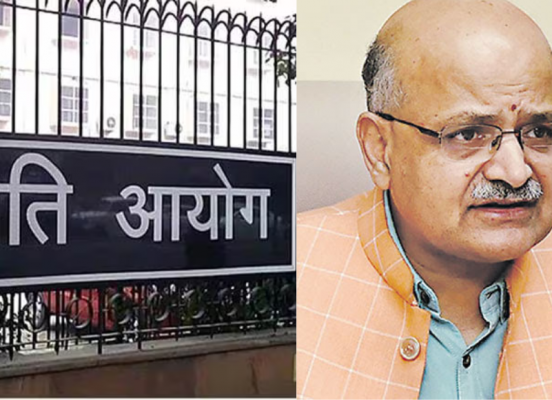
NITI Aayog Pushes for Convergence of MSME Schemes to Fix Fragmented Support System

India’s MSME ecosystem may be headed for a structural reset. On January 15, 2026, NITI Aayog released a strategic report titled “Achieving Efficiencies in MSME Sector through Convergence of Schemes”, highlighting the urgent need to streamline and rationalise the wide array of government support programmes for small businesses. The report acknowledges a long-standing problem faced by MSMEs: while multiple schemes exist across ministries, fragmented implementation and overlapping objectives often reduce their real impact on the ground.
Currently, MSMEs navigate nearly 18 major schemes spanning credit support, skill development, infrastructure creation, technology upgradation, marketing assistance, and innovation. These schemes are administered by different ministries and departments, each with its own eligibility criteria, portals, compliance requirements, and monitoring frameworks. According to NITI Aayog, this siloed approach has resulted in duplication of efforts, inefficient fund utilisation, and low awareness among intended beneficiaries, especially smaller enterprises operating outside major industrial clusters.
The report proposes a shift from scheme-by-scheme administration to a more integrated delivery model. At the core of this recommendation is the idea of convergence aligning schemes with similar objectives and pooling institutional capacities wherever possible. For instance, cluster development programmes across ministries could be coordinated to avoid parallel infrastructure creation, while marketing and export promotion schemes could be aligned to provide a more coherent market-access pathway for MSMEs.
A key proposal outlined in the report is the development of an AI-enabled, centralised digital platform for MSMEs. Rather than navigating multiple government portals, the proposed system would act as a single interface offering scheme information, compliance tracking, financial access tools, and market intelligence. By leveraging shared data infrastructure and analytics, the platform aims to make scheme delivery more targeted, reducing both administrative friction and compliance burden for small businesses.
Another significant recommendation is stronger inter-ministerial coordination through joint planning and shared monitoring mechanisms. The report highlights that many MSME schemes operate in isolation despite serving the same beneficiary base. Improved coordination could help align budgetary priorities, standardise performance indicators, and improve outcome measurement particularly in areas such as credit flow, cluster development, and export readiness.
Importantly, the report frames convergence not as the withdrawal of schemes but as a method to enhance their effectiveness. NITI Aayog notes that MSMEs, especially micro and small units, often lack the capacity to engage with multiple departments simultaneously. A more integrated system could improve last-mile delivery and ensure that benefits reach enterprises that need them most.
The timing of the report is notable. As India positions MSMEs as key drivers of manufacturing growth, employment generation, and exports, efficient policy delivery becomes as important as policy design. The convergence framework outlined by NITI Aayog signals a shift toward systems-level reform moving away from isolated interventions toward a unified support architecture for MSMEs.
If implemented effectively, the recommendations could mark a transition from fragmented welfare-style schemes to a cohesive MSME development ecosystem, improving both efficiency and impact across the sector.

You may also like