What the India–EU Free Trade Agreement Covers and Why It Matters for MSMEs

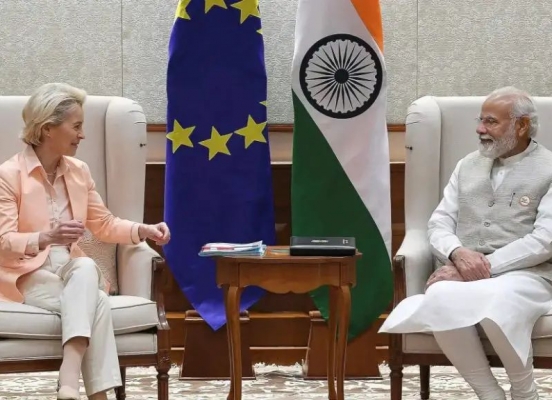
After nearly two decades of negotiations, India and the European Union have finalized one of the most significant trade pacts of the 21st century: the EU–India Free Trade Agreement (FTA). Often described by policymakers as the “mother of all trade deals,” this landmark agreement has the potential to reshape trade dynamics across continents, opening commercial corridors worth trillions and drawing in nearly 2 billion consumers across India and the 27-nation EU bloc.
At its core, the agreement dramatically lowers trade barriers on both sides. India will provide zero tariffs on the majority of goods exported to the EU from day one, with phased tariff elimination over the coming years for most others ultimately covering around 99% of Indian export lines and 97% of EU export lines by value. For Indian MSMEs especially those in textiles, leather products, gems and jewellery, marine products, chemicals, and engineering goods this could be a game changer. Historically, these sectors faced EU tariffs ranging from 4% to over 25% on key products; under the new deal, most such charges will disappear, making Indian products more price-competitive than ever in European markets.
One of the most compelling aspects of the pact for small and medium enterprises is the immediate market access it facilitates. Labour-intensive sectors where MSMEs form the backbone of production and employment will benefit from zero duty access right from the outset. For instance, Indian textiles and apparel exporters will no longer face EU duties, significantly narrowing the competitiveness gap with regional rivals like Bangladesh and Vietnam that already enjoy preferential access. The removal of tariffs on leather goods and footwear similarly strengthens export prospects for clusters spread across Agra, Kanpur, Kolhapur, and Ranipet, where tens of thousands of MSMEs operate.
Beyond goods trade, the agreement also paves the way for expanded services market access. India has secured predictable entry into 144 service subsectors in the EU while offering access to 102 subsectors to European firms. This offers MSMEs in IT, professional services, education, and related knowledge industries a more stable platform to sell services in Europe particularly important for technology and consulting firms seeking scale.
Crucially, the FTA goes beyond tariff reductions. It commits to simplified customs procedures, regulatory cooperation, and enhanced intellectual property protections, elements that disproportionately benefit smaller firms often burdened by complex cross-border compliance. Streamlined documentation and aligned standards will trim costs and reduce the friction that typically hampers MSMEs in global trade.
That said, the deal is calibrated to protect sensitive sectors. Agriculture, dairy, and certain small-car segments are shielded from full liberalization to safeguard domestic producers and jobs. For MSMEs operating within these protected sectors, immediate export gains might be limited but the broader liberalization still offers enhanced access in upstreamable industrial and services sectors.
In summation, the EU–India FTA marks a pivotal moment for India’s micro, small, and medium enterprises. By drastically reducing tariffs, opening services markets, and simplifying regulatory and customs frameworks, the agreement offers MSMEs a rare opportunity to integrate deeper into global value chains, expand exports, attract investment, and scale operations. While implementation and ratification processes remain, the pact’s potential to transform India’s trade landscape especially for MSMEs is already evident.

You may also like