Economic Survey Charts New Course for MSME Exporters

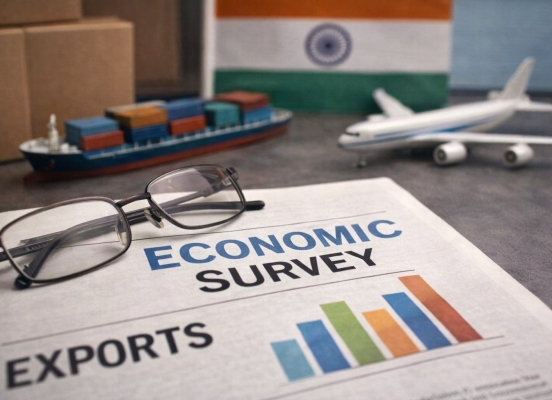
The latest Economic Survey arrives at a time when Indian MSMEs are facing mixed signals from global markets, slowing demand in some regions, new opportunities in others, and rising expectations from international buyers. Beneath the macroeconomic language, the Survey carries a message that is particularly relevant for small and medium businesses: India’s export growth in the coming years will depend on preparedness, not price advantages alone.
The Survey positions exports as a key pillar of India’s medium-term growth strategy, but it also acknowledges the challenges posed by global uncertainty, geopolitical shifts, and supply chain realignments. For MSMEs, this means exports are no longer an occasional opportunity but a strategic necessity that requires stronger systems and long-term thinking.
One of the clearest signals from the Survey is the shift from volume-driven exports to value-driven exports. Competing only on low prices or currency movements is becoming increasingly risky. Global buyers are prioritising quality, reliability, compliance with standards, and consistency of supply. MSMEs that can deliver these will remain relevant, while those relying purely on cost advantages may struggle to retain markets.
The Survey also underlines India’s intent to deepen its integration into global value chains. This has direct implications for MSMEs. Rather than viewing exports only as direct overseas sales, the Survey highlights the importance of being part of larger export ecosystems. MSMEs supplying components, intermediate goods, packaging, logistics support, or specialised services to export-oriented firms stand to gain as manufacturing and trade expand. Being a dependable link in the chain is increasingly as valuable as being a direct exporter.
Free Trade Agreements receive significant attention in the Survey. While FTAs open access to new markets and reduce tariff barriers, they also raise the bar for Indian businesses. MSMEs must be prepared to meet international standards related to product quality, certification, traceability, and documentation. The Survey implicitly warns that FTAs benefit firms that are export-ready, not those that see them as automatic gateways to global markets.
Another recurring theme is export competitiveness beyond incentives. The Survey stresses logistics efficiency, infrastructure improvement, and trade facilitation as critical factors. For MSMEs, high logistics costs, delays at ports, and procedural errors can quickly erode margins. Businesses that invest time in understanding shipping processes, packaging norms, and digital compliance systems will be better placed to compete internationally.
Services exports also emerge as a quiet strength. Beyond IT, sectors such as design, engineering services, technical support, and digital solutions linked to manufacturing are gaining relevance. Many MSMEs are already providing such services, often without formally recognising or structuring them as export offerings.
Importantly, the Survey cautions against over-reliance on currency depreciation as a driver of exports. Sustainable export growth, it notes, comes from productivity improvements, scale, and credibility in global markets.
For India’s MSMEs, the takeaway from the Economic Survey is clear. Export success in the coming years will favour businesses that invest in quality, integrate into supply chains, strengthen compliance, and build long-term relationships with buyers. The export landscape is becoming more demanding but for prepared MSMEs, it also offers more durable and scalable opportunities.

You may also like